
Amidst ongoing tensions with the ruling DMK government, Tamil Nadu Governor R N Ravi has invited Vice President Jagdeep Dhankar to inaugurate a meeting of state university Vice Chancellors in the Nilgiris district, sparking criticism from political parties, particularly the Left, who have urged a boycott. The meeting comes in the wake of the Supreme Court ruling in favor of the Tamil Nadu government regarding the appointment of Vice Chancellors, which has stripped the Governor of his previous authority as Chancellor. The Governor, however, maintains his right to convene the meeting, highlighting the ongoing power struggle between the Governor and the state government. The meeting is scheduled for April 25 and 26.
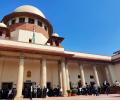
The Supreme Court on Monday agreed to consider listing for urgent hearing the petitions challenging the constitutional validity of the Waqf (Amendment) Act, 2025.
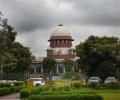
A bench of Justices Sudhanshu Dhulia and Joymalya Bagchi, however, questioned the timing of the exercise, besides offering its prima facie view that Aadhaar card, voter ID card and ration cards could be considered during the SIR in Bihar.

The Supreme Court of India has dismissed a public interest litigation (PIL) seeking to make dowry harassment and maintenance provisions "gender neutral." The court stated that it cannot legislate law and it is the responsibility of Parliament to look into such matters. The PIL, filed by an NGO, argued that these provisions are often misused to harass husbands and their families. The court, however, emphasized that every case must be judged on its own merits, and that the provisions are intended to protect women and children. The court also noted that the allegation of misuse was vague and that such claims should be examined on a case-by-case basis.

This came a day after he argued before the top court as petitioner in-person in a matter related to the abrogation of Article 370, which accorded a special status to the erstwhile state of Jammu and Kashmir and was revoked by the Centre on August 5, 2019.

The owner and manager of Rituraj Hotel in Kolkata have been arrested following a devastating fire that killed 14 people. West Bengal Chief Minister Mamata Banerjee has ordered surprise checks of all establishments in the city to ensure fire safety compliance, after the tragedy highlighted serious violations at the hotel. The hotel has been sealed and special committees will be formed to monitor and identify establishments flouting fire safety norms.
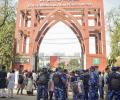
A fresh plea has been filed in the Supreme Court challenging the constitutional validity of the Waqf (Amendment) Act, 2025, claiming it was a "blatant intrusion" into the rights of a religious denomination to manage its own affairs in the matter of religion. The plea, filed by Samastha Kerala Jamiathul Ulema, argues that the amendments would distort the religious character of Waqfs and irreversibly damage the democratic process in their administration. Several other petitions have been filed in the apex court challenging the validity of the bill, including those by Congress MP Mohammad Jawed, AIMIM president Asaduddin Owaisi, and AAP MLA Amanatullah Khan.

Other legal options include approaching the NCLT alleging mismanagement and oppression of minority shareholder

The Supreme Court has directed a Maharashtra authority to respond to a man's plea for initiating contempt action against it after his properties were demolished for allegedly raising anti-India slogans during a cricket match. The petitioner, who hails from Sindhudurg district in the state, claims his house and shop were demolished on February 24 following an FIR against him, his wife, and his 14-year-old son for allegedly raising anti-India slogans during the India-Pakistan Champions Trophy match. The plea argues that the demolition violated the Supreme Court's November 13, 2024 verdict on demolition of properties, which barred demolition without a prior showcause notice and 15 days' time for the aggrieved party to respond. The petitioner seeks directions for initiating contempt proceedings against the chief officer and administrator of the Malvan Municipal Council.

The Supreme Court of India has refused to relax the ban on firecrackers in the Delhi-NCR region, citing continued alarming levels of air pollution. The court emphasized the right to a pollution-free atmosphere as a fundamental right, stating that the ban is necessary to protect public health. The court also highlighted the issue of noise pollution caused by firecrackers. The decision comes after a batch of petitions were filed by firecracker manufacturers seeking relaxation of the ban.
The Supreme Court of India has expressed concern over the protracted trials in heinous offences related to Maoist activities, stating that indefinite incarceration violates the right to liberty under Article 21 of the Constitution. Two separate benches of the court granted relief to two accused, citing the delayed trials. One bench expedited the trial of a man accused of transporting ammunition for a banned organization, while the other granted bail to a man accused of transporting materials for Naxal activities. The court emphasized the importance of speedy trials and suggested the establishment of special courts to handle Maoist-related cases, aiming to expedite proceedings. The court also criticized the practice of examining an excessive number of witnesses, which can lead to indefinite delays in the conclusion of trials.
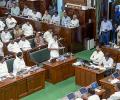
The Tamil Nadu Assembly passed a resolution on Thursday condemning the Centre's proposed Waqf Amendment Bill 2024, calling for its recall. Chief Minister M K Stalin argued that the amendment interferes with religious affairs and would negatively impact the Muslim minority. The resolution was unanimously passed by the Assembly, with support from all parties, including the opposition AIADMK and PMK. The BJP, however, walked out in protest, accusing the ruling DMK of engaging in divisive politics. The bill aims to streamline the Waqf Board's work and ensure efficient management of Waqf properties but has been criticized for potentially encroaching on religious freedom and autonomy. The Tamil Nadu government claims that the amendment would lead to government control over the Waqf Board and its properties, impacting its autonomy and potentially allowing for government acquisition of Muslim-owned lands.

The Supreme Court of India has extended the interim bail of Ashoka University professor Ali Khan Mahmudabad, who was arrested for contentious social media posts on Operation Sindoor. The court, however, restrained him from posting anything online with respect to the cases against him, stating that there was no impediment on his right to speech and expression. The court directed the Special Investigation Team (SIT) to furnish the investigation report on the next date of hearing.

India's proposal to impose retaliatory import duty on certain US products in response to American tariffs on steel and aluminium could cast a shadow over ongoing negotiations for a trade agreement between the two countries, think tank GTRI said on Tuesday. The Global Trade Research Initiative (GTRI) said that if the US engages in consultations with India on the matter or withdraws tariffs, a resolution may be reached.

AIMIM chief Asaduddin Owaisi slammed Pakistani politician Bilawal Bhutto-Zardari for his "blood would flow in rivers" remark and called former cricketer Shahid Afridi a "joker" for his comment on the Pahalgam terror attack. Owaisi also supported India's decision to suspend the Indus Waters Treaty and called for Pakistan to be placed on the FATF grey list. He also advocated for cyber attacks against Pakistan.

A bench comprising Chief Justice D Y Chandrachud and justices P S Narasimha and Manoj Misra said the detailed order referring the case to a larger bench will be uploaded on the apex court website later in the day.
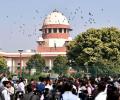
Justice Gavai's comment came while the apex court bench, also comprising Justice Augustine George Masih, was considering a fresh plea seeking an inquiry into the recent violence in West Bengal during anti-Waqf law protests.
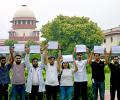
'Residence-based reservation in PG medical courses is violative of Article 14 of the Constitution.'
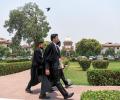
The Supreme Court of India has reserved its interim orders on three key issues related to the Waqf (Amendment) Act, 2025, including the power to denotify waqf properties, the composition of waqf boards, and the provision regarding government land. The court heard arguments from both the petitioners, who challenged the validity of the amended law, and the Centre, which defended the Act as a secular concept. The petitioners sought interim orders to prevent the implementation of certain provisions while the court considers the legal challenges.
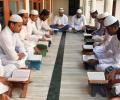
Commencing final arguments on a batch of pleas against the verdict, the bench, heard senior lawyers including Abhishek Manu Singhvi, Salman Khursheed and Menaka Guruswamy for the petitioners.

The Supreme Court of India has asked DMK leader V Senthil Balaji to choose between his ministerial post in Tamil Nadu and his freedom. The court expressed concern over Balaji's reinstatement as a minister despite being granted bail in a money laundering case related to the "cash-for-job" scam. The court fears that Balaji's presence as a minister could influence witnesses in the case. The court has given Balaji until April 28 to make a decision.

The Karnataka high court on Monday did not grant interim relief to Nikhil Sosale, head of marketing, Royal Challengers Bengaluru (RCB), who was arrested on June 6 in connection with the fatal stampede near M Chinnaswamy Stadium, and adjourned the matter for hearing on Tuesday.

If a woman can fly Rafale fighter jet in the Indian Air Force, then why are fewer women officers in gender neutral posts of judge advocate general (legal) branch of the Army, the Supreme Court wondered recently and questioned the Centre's rationale on a 50-50 selection criterion.
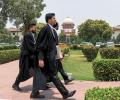
Underscoring the 'presumption of constitutionality in favour of law', the Supreme Court on Tuesday said petitioners challenging the waqf law needed a 'strong and glaring' case for interim relief.

The high court erred in holding that the law was violative of the principle of secularism, said a bench comprising Chief Justice of India D Y Chandrachud and Justices J B Pardiwala and Manoj Misra.

The BCCI sends the offenders and their teams an invoice describing the amount to be paid at the end of the season. It is then up to the team to decide whether they pay the fine or the player who it has been applied to bears the burden.

The Supreme Court of India has granted interim police protection to Discovery Communications India officials who have been receiving threats from followers of self-styled godman Asaram Bapu. The threats were triggered by the release of a documentary series titled "Cult of Fear: Asaram Bapu". The court has directed the Centre and several state governments to ensure the safety of the petitioners, including their offices.
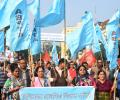
The Supreme Court of India has invalidated the appointment of 25,753 teachers and other staff in West Bengal's state-run and state-aided schools, deeming the selection process "vitiated and tainted." The court ordered the state government to conduct a fresh selection process within three months. The decision comes after a Calcutta High Court verdict in April 2024, which also annulled the appointments. The apex court, while upholding the high court's order, made some modifications, including exempting disabled employees from returning their salaries. The case stemmed from alleged irregularities in the 2016 recruitment process by the West Bengal School Service Commission (SSC), involving OMR sheet tampering and rank-jumping. The Supreme Court had previously termed it a "systemic fraud." Former West Bengal education minister Partha Chatterjee and Trinamool Congress MLAs Manik Bhattacharya and Jiban Krishna Saha are among the accused being investigated in the recruitment scam.
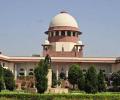
The SC defers the case after Centre informs the court that interlocutor appointed for dialogue in J&K.

The court upheld the guidelines and imposed Rs 1 lakh cost each on the petitioners to be deposited with the CCPA towards consumer welfare.
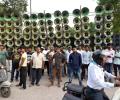
The Bombay High Court has ruled that the use of loudspeakers is not an essential part of any religion and has directed law enforcement agencies to take prompt action against loudspeakers that violate noise pollution norms. The court also ordered the state government to direct religious institutions to adopt mechanisms for controlling noise levels, including calibrated sound systems with auto-decibel limits. The decision came in response to a petition filed by two housing associations alleging police inaction against noise pollution caused by loudspeakers installed on mosques in the area.

Unless Governor Ravi or the Union of India moves in appeal, seeking a hearing by a constitutional Bench, this is where it all will have to end, observes N Sathiya Moorthy.

Here's what you must know about the new rule, its implications, and whether it affects taxpayers' rights and privacy.
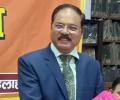
Members of several opposition parties in India have initiated proceedings to impeach Allahabad High Court Judge Shekhar Kumar Yadav for his alleged controversial remarks at a recent event. The impeachment motion, signed by 55 opposition MPs, cites the judge's speech at a Vishva Hindu Parishad (VHP) function, where he allegedly made provocative statements on a uniform civil code and the law working according to the majority. The Supreme Court has taken note of the controversy and sought details from the Allahabad High Court.

Article 35-A, which was incorporated in the Constitution by a 1954 Presidential Order, accords special rights and privileges to the citizens of Jammu and Kashmir and denies property rights to a woman who marries a person from outside the state.

Prem Chand Lochab's election to secretary general's post is in violation of WFI's constitution and he is now preventing the growth of wrestling in the country by demanding a postponement of the junior Nationals, said Darshan Lal, who had lost to him in the recent polls, on Saturday.
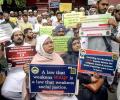
'The new Waqf bill sows the seed for conflict in every town and village of India.'

'It is typical of China's strategic deception of making virtue out of necessity,' observes Rup Narayan Das.
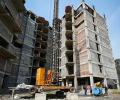
'Buyers should be provided either a fixed possession date or a firm date for the start of construction.'
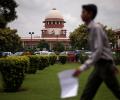
The Supreme Court of India has ordered the burial of a pastor whose body has been lying in a mortuary since January 7th, after a dispute arose regarding the location of his burial. The court issued a split verdict, with one judge ruling for burial on the family's private land and the other for a designated place away from the village. The decision was made due to the prolonged delay in the burial and the potential for unrest. The court ordered the state government to provide security to prevent any further incidents.
